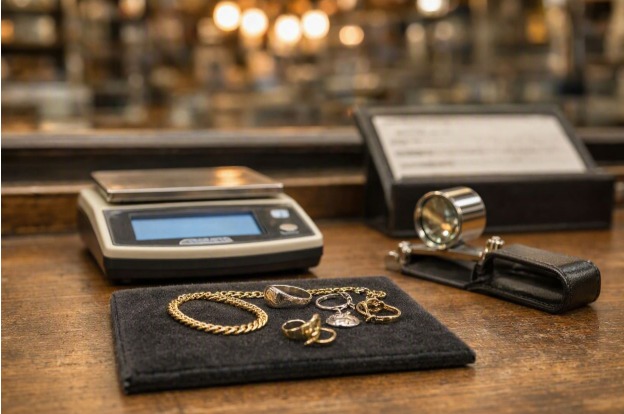

Walking into a pawn shop with a bag of gold and silver can feel like stepping into a negotiation you are already losing. The person behind the counter does this a hundred times a week. You might be doing it once in your life. They weigh your items, tap at a calculator you cannot see, and slide a number across the counter.
That number is rarely arbitrary. There is a fairly predictable formula behind it, and once you understand how pawn shops actually arrive at their offers, the whole exchange stops feeling like a mystery. This is not an attack on pawn shops. They are a legitimate, often convenient option, and they take real risk to stay in business. But you deserve to walk in knowing what your metal is genuinely worth and why their offer looks the way it does.
The Formula Behind Every Offer
Almost every pawn shop offer on precious metal comes down to the same three inputs. Weight, purity, and the current spot price of the metal, followed by a discount that covers their costs and profit.
The first three are objective. Your item weighs what it weighs. Its purity is stamped on it or tested. The spot price is a public market figure. Multiply those together, and you get the melt value, the raw worth of the metal itself. The formula is simply weight times purity times the current spot price.
That melt figure is your baseline. It is not what you will be offered, but it is the number every offer is measured against, and it is the single most useful thing you can know before you walk in. You can work it out in seconds with a calculate the melt value if you know the weight and the markings.
The fourth input is where the negotiation actually lives, and that is the percentage of melt they will offer you.
What Percentage of Melt Value Should You Expect
This is the part most people never learn. Pawn shops do not pay melt value. They pay a fraction of it, and that fraction varies widely depending on what you are selling and where.
Typical Pawn Shop Offers as a Percentage of Melt Value
| Item Type | Typical Offer | Why |
| Recognised bullion coins | 85 to 95 percent of melt | Easy to resell, no assay needed |
| Gold jewelry with a marked karat | 60 to 80 percent of melt | Must be refined; testing costs money |
| Sterling flatware and scrap silver | 50 to 75 percent of melt | Bulky, low value per gram |
| Unmarked or mixed metal | 40 to 60 percent of melt | The testing risk falls on them |
| Silver plate | Usually declined | Almost no recoverable silver |
Ranges are indicative and vary by shop, region, and market conditions. Volatile metal prices tend to push offers toward the lower end.
The pattern is consistent. The easier your item is for them to resell, the closer to melt you will get. A recognised one-ounce bullion coin can be resold the same afternoon with no testing and no refining. A tangle of unmarked chain has to be tested, sorted, and shipped to a refiner, and every one of those steps costs them money that comes out of your offer.
The Four Things They Are Quietly Accounting For
That gap between melt value and the offer is not pure profit. Four real costs sit inside it, and understanding them makes the number far less insulting.
Refining costs come first. Scrap gold and silver cannot be resold as they are. It goes to a refiner who takes a fee and a percentage, and that cost comes out before the shop makes anything.
Testing and risk come next. Every unmarked piece has to be acid tested or scanned. Plated items, filled items, and outright fakes turn up constantly, and the shop absorbs the loss when something is not what it appeared to be.
Holding risk is third. Metal prices move. A shop that buys your silver today may not resell it for weeks, and the price can fall sharply in that window, so they price that risk in.
Overheads are the last piece. Rent, staff, insurance, security, and licensing all have to be covered by the spread between what they pay and what they sell for. None of that means you should accept the first offer. It means a reasonable offer will always sit below melt, and your job is to find out how far below.
A Pawn Loan and an Outright Sale Are Two Different Numbers
It is worth knowing which transaction you are actually asking for, because pawn shops price them differently.
A pawn loan uses your item as collateral. You get cash now, and you can reclaim the item by repaying the loan plus interest within an agreed period. Loan offers are typically lower than sale offers, because the shop is pricing in the possibility that you do not come back and they are left to resell it.
An outright sale means you are done with the item and they own it. This usually produces the higher number of the two. If you have no intention of buying the piece back, say so clearly and ask for a sale price. Some people accidentally negotiate against a loan figure when a straight sale would have paid more.
Six Things to Do Before You Walk In
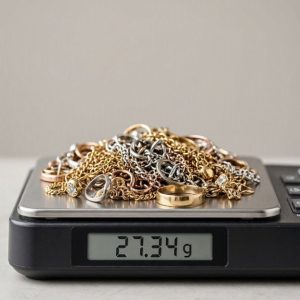
Weigh everything yourself first. A cheap digital scale that reads in grams is enough, and knowing your own weights removes the biggest information gap in the room. Sort by purity next, grouping items by their markings, because mixed lots invite a lowball blended rate. Set aside the plate, since anything marked EPNS, EP, or silver plate has essentially no melt value and only muddies the deal. Calculate your melt baseline so you know the number every offer is measured against before anyone quotes you. Pull out anything potentially collectible, because old coins, named flatware patterns, and signed designer pieces can be worth several times their metal value, and pawn shops usually price on metal alone. Finally, get more than one quote, because offers on identical items routinely vary by 20 percent or more between shops, and a second stop often pays for itself many times over.
When a Pawn Shop Is Actually the Right Choice
For all the caution above, pawn shops genuinely suit some situations. They pay immediately, they take small and awkward lots that refiners will not bother with, and they handle broken, mismatched, or unmarked material that is a nuisance to sell elsewhere. If you need cash today, or you have a modest bag of scrap that is not worth shipping anywhere, a fair pawn shop offer can be a perfectly sensible outcome.
Where they are less competitive is on recognised bullion and on larger quantities. If you are holding a meaningful amount of coins or bars, specialist dealers will usually pay closer to melt, sometimes substantially closer, because they can resell without refining anything.
The Bottom Line
Pawn shops are not hiding a secret formula. They are applying an ordinary one, which is melt value minus their costs and risk. What catches people out is not the arithmetic. It is walking in without knowing the baseline that arithmetic starts from.
Weigh your items, note the markings, and work out the melt value before you go. Ask whether the quote is for a sale or a loan. And get a second opinion before you accept anything. If you would like a starting number, you can get an instant estimate with the free ScrapSilverCalc. Do that, and you are no longer negotiating blind. You are simply comparing offers, which is a very different conversation.
FAQs:
How much do pawn shops pay for gold and silver?
It depends on the item. Recognised bullion coins often fetch 85 to 95 percent of melt value, marked gold jewelry usually 60 to 80 percent, and sterling or scrap silver around 50 to 75 percent. Unmarked or mixed metal pays less because the testing risk falls on the shop, and silver plate is usually declined entirely.
Why do pawn shops pay less than melt value?
The gap covers real costs. Scrap has to be refined, unmarked pieces have to be tested, prices can fall while the shop holds the item, and rent, staff, and insurance all have to be paid. A reasonable offer will always sit somewhat below melt value for these reasons.
Is it better to pawn or sell my gold and silver?
If you never intend to reclaim the item, an outright sale usually pays more than a pawn loan, because a loan offer factors in the risk that you do not return. Make it clear you want a sale price so you are not quoted the lower loan figure by default.
How do I know if I am getting a fair offer?
Work out the melt value before you go, using the weight, the purity, and the current silver or gold price. That gives you a baseline. Then compare the offer to that baseline as a percentage, and get at least one more quote from another shop, since offers on the same items vary widely.
Should I clean my silver or gold before selling it?
There is no need, and with coins it can actually reduce value, since collectors prize original surfaces. Buyers assess the metal itself, so cleaning makes little difference to a scrap offer and can occasionally do harm with collectible pieces.